
Laurence Sterne
Critique
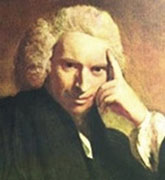
Born
1850
Died
1894
Publications
Novels, travel writing
Writing languages
English
Literature
• Tristram Shandy (1759–1967)
Novels
• Tristram Shandy (1759–1967)
British Literature
• Tristram Shandy (1759–1967)
Our most influential unread author
Laurence Sterne is one of those great, acclaimed, classic authors of British literature whom no one reads.
No, that's not quite true. English literature majors have to read his alleged masterpiece, Tristram Shandy (1759–67). Hundreds of PhD dissertations analyze this work. And someone must have read that novel to write the screenplay for the movie based on it. Maybe even a few people who saw the film were led to start reading the novel, though how many got past the first ten pages, I can't imagine.
And there are all those modern literary figures, like James Joyce and Flann O'Brien, who are said to have been influenced by this centuries-previous writer.
But have you ever met a non-academic, non-literary-genius who has read any work of Sterne's from start to finish? Not likely.
Which is too bad really. Sterne seems to have had a lot of fun with his writing and, once the reader gets past the surface difficulties, his work can be bawdy, incredibly witty, devastatingly insightful, and—most of all—uproariously funny.
Losing the way
Those difficulties though. Bizarre and obscure philosophical, political and historical references (many of them bogus). Sentences that keep interrupting themselves. A plot that inches ahead, when it is not falling backwards. A modern reader (and probably many a reader in Sterne's day) could lose the way very quickly.
Sterne came to his calling as a writer relatively late in life. Born in Ireland into a British soldier's family, he was a clergyman in northern England for many years and even tried his hand at farming, despite suffering from tuberculosis.
In 1759, Sterne wrote a short novel, A Political Romance, a satire on ecclesiastical politics intended to support his dean in a church struggle. It was immediately suppressed, although it was later republished after Sterne's death as The History of a Good Warm Watch-Coat.
But his writing appetite had been whetted and he started on Tristram Shandy. The first couple of parts (or "books", as they were called) were published also in 1759 and won him quick fame. He continued to add new volumes to the work for the next eight years.
To ease his TB, Sterne left England for a trip through Europe, where he was also celebrated. This resulted in Sentimental Journey (1768), an unfinished novel that satirizes travel writing. The tour is related in diary format by Yorick, a kind-hearted but bumbling Don Quixote-style character previously referenced in Tristram Shandy.
Sterne died in London shortly after the first of the intended volumes of A Sentimental Journey was published.
— Eric
Critique
See also:
Buy the book:
X (Twitter):
