The greatest literature of all time, place and genre

Our flagship list The Greatest Literature presents the world's most acclaimed, important, engaging and beloved literature of all time.
It's based on three decades of research with readers, writers, critics and scholars, as well as the assimilation of titles from hundreds of "best-of" lists, polls, anthologies, collections, curricula, reading guides, literary awards, critical works and many other sources both in print and online.
Many more lists on the site highlight the greatest works in different literary forms, genres and countries.
To access any list, click on the panels at the top of any page or on the inks in the overview below.
You can also link from the lists to my critiques and other information on selected books, authors and adaptations of the world's greatest literature.
And keep reading!
— Editor Eric
Editor Eric's Greatest literary lists
All literature
• The Greatest Literature of All Time
Literary forms
• Novels • Novellas • Novel Series
• Plays
• Short Poems • Long Poems • Poetry Collections
• Top 99 Novels • Top 99 Stories • Top 99 Poems • Top 99 Plays
Fictional genres
• Crime and Mystery • Crime and Mystery Stories • Crime and Mystery Series
• Fantasy Fiction • Fantasy Stories • Fantasy Series
• Historical Fiction • Historical Fiction Series
• Horror • Horror Stories
• Romance
• Science Fiction • Science Fiction Stories • Science Fiction Series
Nonfiction genres
• History
• Memoirs
• Religion
• Science
• Travel
Countries and regions:
• Africa • Ancient Rome • Argentina • Australia • Austria • Benelux • Brazil • Britain • Canada • Caribbean • China • Denmark • Eastern Europe • France • Germany • Greece • Ireland • Israel • Italy • Japan • Latin America • New Zealand • Nigeria • Norden • Norway • Poland • Portugal • Russia • South Africa • South Asia • Southeast Asia • Spain • Sweden • Switzerland • United States • West Asia
Really Long Lists
• Great Ancient Works • Great Medieval Works • Great Renaissance Works • Great Eighteenth-Century Works • Great Nineteenth-Century Works • Great Twentieth-Century Works • Great Twenty-First Century Works
Sixteen recent book and author critiques
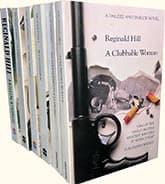 The seriously entertaining detective novels
This is how it's done. Many crime and mystery writers have tried to merge their genre work with literary fiction. They've spun paragraphs describing nuances of setting, decor, dress or personal appearances. They've added long and allusive internal monologues. They've presented their detective protagonists as finely.... Dalziel and Pascoe series
 The bigger mysteries
Peter Høeg's atmospheric writing in his most famous novel can make you question the genre it supposedly belongs to. It can lead you to wonder whether you should be thinking in terms of genres at all. Miss Smilla's Feeling for Snow is a mystery that spreads far beyond its causative incident, the death of a young boy in Copenhagen.... Miss Smilla's Feeling for Snow
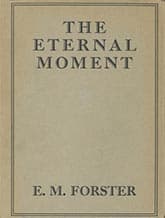 Here in the Future
Among the seminal figures in early twentieth-century science fiction, one name stands out as an anomaly. E.M. Forster was—and is—revered as the author of such heavyweights of social conventions as A Room with a View (1908), Howards End (1910) and A Passage to India (1924). Most readers would not associate him.... The Machine Stops
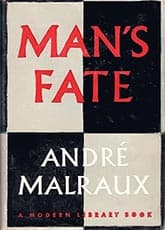 Collective action, individual meaning
Despite focusing on a specific event, place and time in Chinese history—the Communist uprising in Shanghai and its brutal suppression by the Kuomintang over a few days in 1927—Man's Fate reads more like a French philosophical novel. Which it is. Yes, it is sympathetic with the Chinese revolutionary cause.... Man's Fate
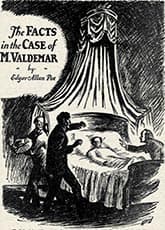 From scientific curiosity to disgust
It's tempting to deride "The Facts in the Case of M. Valdemar" as an earlier century's curiosity that no one would take as a factual report now. Hypnotizing the dying. Talking to the dead. Gruesome physical transformation. Yet think of all the really bizarre paranormal and pseudoscientific accounts that millions.... The Facts in the Case of M. Valdemar
 The ideas and the romance
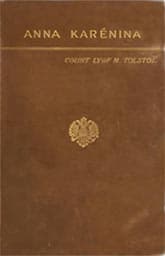
Leo Tolstoy's War and Peace (1869) and Anna Karenina (1878) are usually both among the books competing for the title of "greatest of all time". They often take turns at the top spot. A Tolstoy fan though may resent a ranking that places either one of his two greatest books below the other. It's tough to choose. So here's.... Anna Karenina
 The hoe of justice
Austin Clarke's best-known and most awarded novel can divide readers, if not critics. Stylistically The Polished Hoe falls into the category of the poetic novel. There it joins the works of many other acclaimed novelists but especially, it sometimes seems, Canadian authors. Fellow Giller Prize winners Michael Ondaatje and.... The Polished Hoe
 Detecting in the real world
It may be difficult to see what is so groundbreaking about this series of ten detective novels published from 1965 to 1975. Crime writers have copied and built upon its innovations ever since, making them commonplace today. Maj Sjöwall and Per Wahlöö have been credited with having created the police procedural.... Martin Beck series
 The future that once was
Finding a copy of Hugo Gernsback's science fiction novel Ralph 124C 41+ has been a cause of both delight and disappointment. Delight because this strangely titled book is said to be a semi-rare classic, by one of the genre's most influential writers and editors, sometimes called the "father of science fiction" whose.... Ralph 124C 41+
 Vengeance is ours
Separately the plays in Aeschylus's house of Atreus trilogy are skimpy. Or they may seem so to the modern reader or theatregoer. In each instalment the narrative turns on a single great dramatic incident. In Agamemnon the king of the title returns home victorious from the ten-year Trojan War, only to be killed by.... Oresteia
 A what-if and when-if classic
Bring the Jubilee is one of those modern works declared a classic within certain genres but, despite repeated reprinting, largely forgotten by the general reading public. Which is appropriate in this case perhaps, as Ward Moore's novel has to do with changing history. Did someone go back in time to remove copies of.... Bring the Jubilee
 Going, going, gone flat
Around the turn of the twenty-first century, we had a spate of bestsellers with "girl" in the titles: Girl, Interrupted (1993), Girl with a Pearl Earring (1999), The Other Boleyn Girl (2001), The Windup Girl (2009), Gone Girl (2012), The Girl on the Train (2015), The Girl with the Dragon Tattoo (2005) and its similarly named.... Gone Girl
 Selling the good book for fun and profit
When they got around to making the movie of Elmer Gantry—more than three decades after the novel came out—they still felt compelled to preface it with a warning: We believe that certain aspects of Revivalism can bear examination—that the conduct of some revivalists makes a mockery of the traditional.... Elmer Gantry
 Another not-so-different world
What is this? You could waste a lot of time trying to figure out what kind of novel The Yiddish Policemen's Union is. Some people have clearly decided. The science fiction community has claimed Michael Chabon's 2007 novel as one of its own, conferring on it a slew of accolades, including the prestigious.... The Yiddish Policemen's Union
 Becoming more than human
The superman concept has had a steady run in science fiction. Since the genre's early days, great and mediocre writers have produced narratives around characters surpassing the natural limits constricting humanity—with or without the disturbing Nietzschean or fascist undertones. Readers have long been fascinated.... A.E. van Vogt
 Then and now in middling America
A century after its first publication, the story of George Babbitt can elicit reactions of both "This is so dated!" and "Just like today!" And often from the same readers. Sinclair Lewis's most influential novel, Babbitt, deftly satirizes the middle-class customs, political fashions and cultural artefacts of its time and place—namely.... Babbitt
Index to all book critiques • Index to all author critiques
Features of note
How works were selected
What makes this list of great literature the most accurate, reliable and comprehensive? More than three decades of research have created—and continually updated—Editor Eric's lists of the greatest literature. See "Creating the Greatest Literature of All Time" for more about the whole, painstaking process.What's so great about these books?
Readers and critics can have widely diverging ideas about what makes a certain book good and another one not-so. How can we find agreement on which works are the greatest? Can popular genre books be compared with literary masterpieces? How is a Greatest Literature of All Time list even possible? See "What does 'Greatest' even mean?"Call it science fiction, scifi, speculative fiction or SF—but what is it?
The story of the continuing struggle to define this genre and distinguish it from others. How Editor Eric settled on the criterion used for his greatest science fiction list. See "What is science fiction?"Finding the best translations
Much of what you read in English was not written in English. Does it matter? Short answer: Yes. See the long answer in "Does it matter which translation you read?"Much ado about Shakespeare
He's the greatest of course—at least most people think so. So we have a lot of sometimes offbeat material about the Bard to offer:
• William Shakespeare: What was he really about?
• The controversy: Did Shakespeare really write those Shakespearean plays?
• The histories: What Shakespeare wrote—and what really happened
• What they've said: Not all writers have thought Shakespeare's so great
And, after all that, the plays are still the thing:
• Hamlet • Henry IV, Part 1 • Julius Caesar • King Lear • Macbeth • Othello • The Merchant of Venice • Romeo and Juliet • The Tempest
