The Mill on the Floss
Critique • Quotes • At the movies
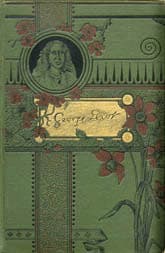 1885 edition
About the book
First publication
1860
Literary form
Novel
Genre
Literary, psychological fiction
Writing language
English
Author's country
England
Length
Approx. 202,000 words
Eliot lite, but getting heavier
George Eliot's first great popular novel gives only hints of the depths to be plumbed in the future, yet it has become an enduring favourite for its own virtues.
In many ways, The Mill on the Floss is a silly romantic story, similar to many others in the nineteenth century: a spunky young girl is the despair of her traditional family, grows into womanhood to be wooed by several suitors, makes socially disastrous choices before finding her one true love....
However, in this case the melodramatic ending reveals her great love is not what is usually anticipated in such novels.
In the course of telling the story, a number of other interests are revealed. When, through little fault of her own, our heroine is shamed, the small-town vindictiveness brought to bear against her is brilliantly depicted (possibly taken from Eliot's own experience as a social outcast in the provinces), along with examples of some unexpected champions rising above the pettiness.
The Mill on the Floss actually has two major story arcs, starting with the peak and decline of the Tulliver family fortunes, as it affects young siblings Maggie and Tom. This part of the novel features some great characterization of not just Tullivers, but their relatives, neighbours and school chums. A multilayered world is created and the reader becomes engaged with this world, wondering how it will all play out.
But after the family is left broke and broken, the narrative shifts to the affairs of Maggie's heart. Though it may have been popular in its day, this is the weakest stretch of the novel—at least until disaster strikes Maggie in this arena as well and we're thrown back into the social milieu. The resolution features a suddenly arising natural disaster and a hasty return to the initial story of Tom and Maggie.
Not so silly
Any such bare description of the plot makes The Mill on the Floss sound like an insubstantial potboiler, perhaps not too different from the "silly novels" of other women writers she had criticized. And to some extent that's what it is.
What raises it though is Eliot's intelligence and her writing skill, which manage to squeeze in interesting observation between the lines. Her generalizations about the kinds of people found in social settings are particularly entertaining and many of her lines, such those about the place of women, contain ironical digs that her original readers may have missed.
There is also a slightly disturbing ambiguity in The Mill on the Floss for the modern reader. While Maggie is the protagonist with who we are generally in sympathy, in contrast to the narrow-mindedness of relatives and townsfolk, at times it seems the author is playing to a readership who would demand that Maggie's free-spiritedness and disobedience be recognized and punished.
Maggie's inability to rein in her good-natured impulses and conform to the dour norm of her community causes her great guilt and ultimately a bad end. In later works, Eliot is to highlight the contradiction all the more but resolve it differently.
The Mill on the Floss is not classic, full-blown Eliot, but it's on the way—which is more than can be said for most other romantic literature of the time.
The narrator mystery
By the way, there's a question about the novel that readers might enjoy pondering.
Many a great novel is narrated by a figure whose existence is implausible. We generally call them "eye of God" narrators, stand-ins for the authors who are at liberty to describe any scene and any character's inner life they wish.
But The Mill on the Floss puts a finer point on the impossible narrator. At the beginning of the novel a personage arrives on stage to discuss their return to the Floss, reminisces about what happened there some years ago and introduces us to the scene inside the Tulliver home to start the narrative. And that's the last we hear from their perspective. Did Eliot forget to bring back and explain the observer? Did she forget how the novel began and kill off the narrator in the course of the story? Or was that simply a ploy to give us an illusion of familiarity at the start, which she consciously dropped once we were caught up in the story ourselves?
Eliot had much to say about the different styles novelists use to start their stories but this one may be her own invention.
— Eric
Critique • Quotes • At the movies
See also:
Buy the book:
X (Twitter):
